



Kristen Hulse doesn’t just understand the legal industry—she’s lived every chapter of it. With a career spanning over two decades, Hulse has successfully navigated the shift from practicing law to pioneering the “people side” of the profession. Today, as the newly minted Chief Talent Officer at Haynes Boone, she is bringing a unique, 360-degree perspective to the firm’s workforce strategy.
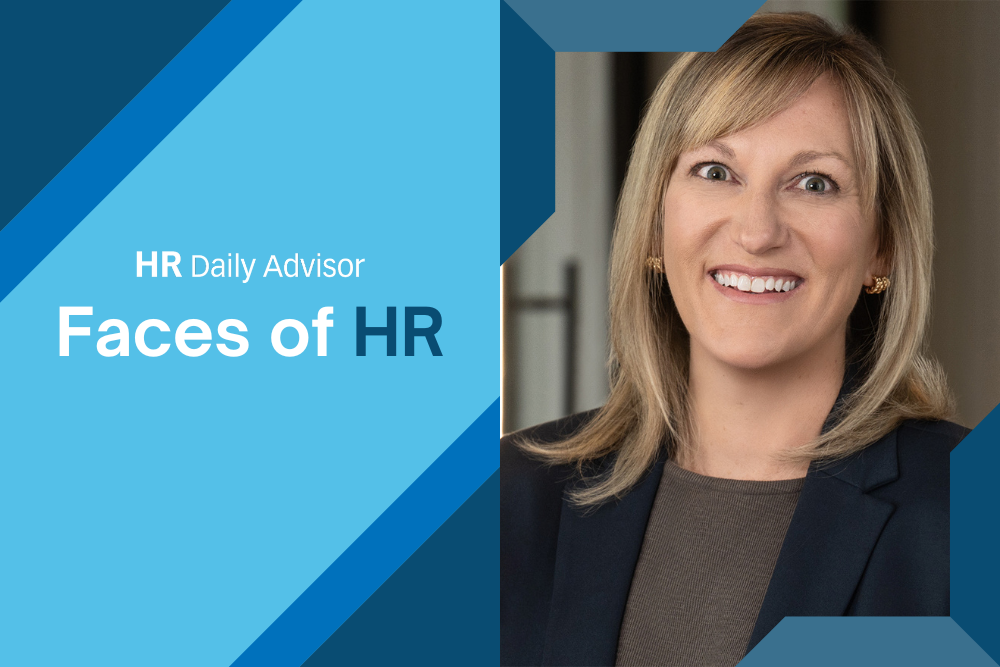
Her journey is a masterclass in following your “pull.” After starting as a paralegal and practicing as an associate attorney until 2009, Hulse realized that while she loved the legal world, her true passion lay in the people who power it. She felt a strong calling toward professional development and strategy, but she didn’t just jump in—she did her homework.
Following the advice of industry mentors, she spent a decade in the world of academia, serving as an advisor and faculty member at prestigious institutions like Georgetown Law. This “interim step” turned into a defining era, allowing her to master the art of counseling and gain a front-row seat to the evolving needs of the next generation of lawyers.
Now, only a couple of months into her role at Haynes Boone, Hulse is back in the firm environment she loves. She oversees everything that makes a legal career thrive: recruitment, HR, wellness, and inclusion. For Hulse, it’s about more than just processes; it’s about a people-forward approach that recognizes the value every individual adds. As she settles in, she’s focused on the pulse of the firm—appreciating the talent and refining the priorities that will define the workforce for years to come.
In our latest Faces, meet Kristen Hulse.
Who is/was your biggest influence in the industry?
My greatest professional influence is Maggie Callicrate, Chief Executive Officer for Coblentz Patch Duffy & Bass LLP in San Francisco, who hired me for my first professional role in this space (serving as the firm’s first director of recruitment and professional development). Though I felt like quite an imposter in my first few months, I knew that Maggie was invested in shaping the build-out of my skillset. As exceptional of a financial and business leader as she is, to me she is the ultimate people strategist. Maggie made time for me every single day and guided my people first perspective to talent. She contextualized complicated issues, guided me through her thought process, let me know when not to sweat the small stuff, and always made me feel that I had something valuable to contribute. I can only hope to be as motivating and insightful of a leader as she has been to so many.
What’s your best mistake and what did you learn from it?
I love the framing of this question, as I’m a very growth-oriented person who is always learning. Again, here I’m going to reflect on my time in private practice. I was a junior associate working from the firm’s London office when I was asked to review and provide comments on a client’s public-facing advertising materials. I approached the task from a strong regulatory perspective and crafted a laundry list of several potential issues I’d spotted, which I emailed to my supervising partner in bullet-point format. The partner came to my office with some critical feedback. Suffice it to say that my issue-spot lacked contextual analysis and recommendation – I wasn’t proactively solving a problem, and I certainly wasn’t recognizing the client’s business reality or how they might receive and react to this information. The partner shared that he (and our client) would be relying on my professional judgment, so I needed to be more solution-oriented and put myself in the shoes of our client (who was not a lawyer).
This all sounds very basic, but it was really a turning point in my career because it kicked me more in the direction of being others-focused in my approach to advice. It’s when I transformed from being an issue-spotting technician to a people-oriented problem-solver, and when I started to craft my written and oral communications with BLUF (bottom line up front), mindful of the need to provide a contextual recommendation that will meet my client (internal or external) where they are. Now I always try to place myself in my client’s shoes to understand their perspective and how they may receive the information I’m about to share – and tailor accordingly.
What’s your favorite part about working in the industry? What’s your least favorite part, and how would you change it?
My favorite part of supporting people-oriented functions is simply the opportunity to be consulted as a resource by a variety of personnel, and to feel that I’ve been helpful in some way – to them, and by extension to the firm. No matter how challenging the problem that I’m tackling, having problem-solving as my job is exactly where I want to be. In close second, I truly relish the opportunity to be creative in building teams and processes that set our people up for sustained success. I am always in brainstorm-mode and seeking new ways of doing things to meet the moment at hand.
I suppose my least favorite part about this industry is the skepticism or dread professionals sometimes convey when labeling something they don’t like or agree with as “HR,” or “administration.” While I can’t change how people think, I do try to lead by example – taking a keen interest in my colleagues and building relationships of trust throughout the firm; encouraging the others-focused communication approach I mentioned earlier, especially when conveying difficult news; being grounded in business and commercial realities; and amplifying the ways that a people-first strategy fosters opportunity and understanding rather than roadblocks. Here, I do think my legal training helps me to see the gray areas where others may not, weigh different perspectives alongside policies and regulations, and make judgment calls accordingly.
How can HR most effectively demonstrate its value to the leadership team?
As with any administrative function, HR is most effective when it takes a consultative and collaborative approach with key stakeholders. Adam Grant’s guidance regarding “humble curiosity” is useful here. While we may have extensive experience in our domain, we are not experts across-the-board, and there is always something to learn from our colleagues. Owning that, and expressing curiosity before judgment, greases the wheels toward building trusting relationships while also obtaining data to take on board when helping to solve problems. These same attitudes and behaviors also inspire the great multidisciplinary teamwork from which innovation flows.