
Time to Ditch the Annual Performance Appraisal?
Ah, the annual (or semi-annual) performance appraisal. One of the few rituals of work life that’s loathed in almost equal measure by employees, managers, and HR alike.




Practical HR Tips, News & Advice. Updated Daily.
Ah, the annual (or semi-annual) performance appraisal. One of the few rituals of work life that’s loathed in almost equal measure by employees, managers, and HR alike.

Faced with the challenge of satisfying a more demanding employee population, managers will be responsible for using this technology to infuse the workplace with a greater feedback culture. Why is feedback important for managers?

It’s true, none of us is getting any younger. But what’s especially interesting is that our workforce is becoming significantly older. In fact, it’s projected that by the year 2030, the number of people 65 years or older in the U.S. will represent 20% of the U.S. population, and many of them will still be […]

Most leaders of companies today recognize the importance of having engaged people at work. Yet research from the Metrus Institute, Gallup, and others say that between 50% and 80% are not fully engaged. For many organizations, a majority of employees are only partially engaged, which research has shown reduces performance and customer satisfaction while increasing turnover. Worse yet, your best talent—those with lots of options—are most likely to leave.

There are several differences between how top-performing companies handle compensation and how typical companies approach the issue, according to the results of a recent survey.

Domestic and global mobility grow increasingly complex as economic, geographic, and individual employee factors are all weighed together when it comes to making policy decisions. Traditional relocation programs can struggle to meet the challenges of this complexity, pushing firms to look for flexibility.
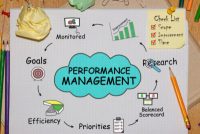
Twenty-six percent of participants in a recent survey provide training for performance evaluators on an annual basis, and approximately 10% do so more frequently.

Building a successful business depends largely on hiring the right people. But as small and midsize firms expand, how strong is their hiring process? A new survey from global staffing firm Robert Half aimed to find out. Among the results:

“Upskilling”—investing in the skills of front-line workers—has upfront costs, but it can save employers time and money in the long run, says Jaime Fall, director of UpSkill America at the nonprofit Aspen Institute.

There is so much written about Millennials and their supposed character traits: a sense of entitlement (e.g., expecting a promotion without “paying their dues”), a questionable work ethic (e.g., coming in late and leaving early), and a lack of loyalty (i.e., being job hoppers). Not all organizations are actually having these experiences with Millennial employees. However, I suspect that some hiring managers have a misconception about Millennials based on what they are reading versus actually experiencing it for themselves.